Premium Beverages · Global
CHAGEE: The brand that relaunched itself into a global category
The opportunity
CHAGEE did not set out to become another bubble tea chain. It set out to do for tea what Starbucks did for coffee.
Founder Zhang Junjie believed tea was already one of the world's most consumed beverages, yet it lacked a modern global brand that could make it aspirational, premium, and part of everyday urban life. While bubble tea brands competed on novelty, sugar, and endless menu variation, CHAGEE saw a different opportunity — to elevate fresh-leaf tea into a premium lifestyle experience that a new generation could make a daily ritual.
That reframing changed every subsequent decision, from store design to menu engineering to international expansion strategy.
"Tea is the second most consumed beverage in the world, but it hasn't had the same lifestyle positioning that coffee has." — Eugene Lee, CHAGEE APAC CMO
The challenge
Creating a new premium category is harder than competing within an existing one. CHAGEE had to convince consumers, franchisees, and markets across Asia that a tea brand could occupy the same cultural and emotional space as a premium coffee chain — without the decades of brand equity Starbucks had already built.
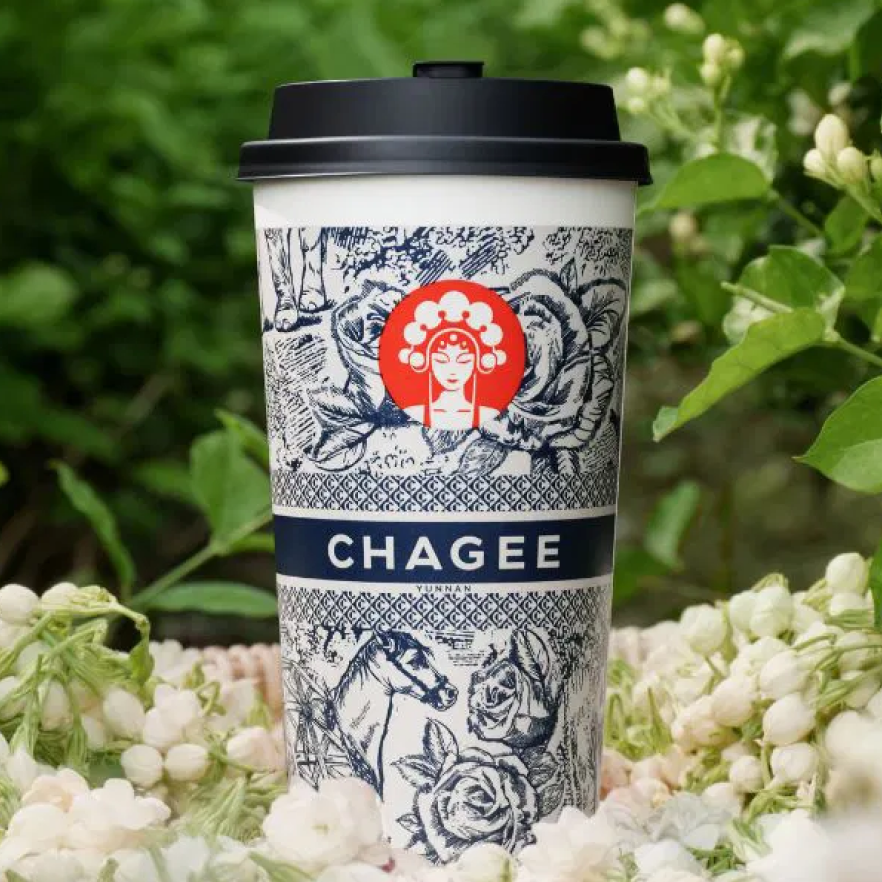
The challenge was compounded by an early misstep: CHAGEE's original identity borrowed so heavily from European luxury fashion aesthetics that it drew widespread comparisons to Dior online. The brand had attention, but it didn't yet have its own identity. Recognising that distinction — and acting on it — was what separated CHAGEE from brands that stall at scale.
What they did right
Had the humility to relaunch — more than once
Between 2018 and 2021, CHAGEE continuously refined its visual identity, packaging, store concept, operations, and product positioning. The defining moment came in 2021 with a major brand and product upgrade that introduced the Fresh Milk Tea series. This wasn't a rebrand in the cosmetic sense — it was a strategic repositioning that traded borrowed luxury aesthetics for something CHAGEE could genuinely own. Most brands at this stage of growth defend what's working; CHAGEE questioned it.
Simplified before scaling
Most beverage chains add products as they grow. CHAGEE removed them. The company significantly reduced its menu, eliminating fruit teas and peripheral lines to concentrate on its core fresh-leaf milk tea offering. The result was better operational consistency, faster staff training, cleaner franchise execution, and sharper customer recall. Complexity was traded for scalability — a counter-intuitive move that made rapid expansion possible without sacrificing quality.
Built a lifestyle brand, not just a beverage brand
CHAGEE invested in elegant stores, premium materials, digital ordering, tea education, and hospitality. Consumers weren't simply buying a drink — they were participating in a modern interpretation of Chinese tea culture. Unlike bubble tea brands, CHAGEE deliberately resembled a café destination, which expanded both its pricing power and the occasions on which consumers chose it.
Chose the right competitor to position against
One of CHAGEE's most consequential decisions was choosing not to compete with other bubble tea chains. By positioning itself closer to Starbucks than to Mixue or Gong Cha, CHAGEE reframed the conversation entirely — from promotions, sugar, and novelty to experience, atmosphere, quality, and ritual. That single competitive positioning decision expanded both its addressable market and its acceptable price point.
Built an original identity from cultural authenticity
After its relaunch, CHAGEE shifted toward Chinese cultural storytelling, tea heritage, and proprietary visual assets. Rather than looking like a luxury fashion brand selling tea, it became a premium tea brand inspired by Chinese culture. Ironically, this made CHAGEE stronger internationally, not weaker. Authenticity became a competitive advantage precisely because it couldn't be easily copied by a Western brand or a generic bubble tea chain.
Standardised systems before globalising stores
Rather than expanding aggressively and fixing operations later, CHAGEE invested heavily in standardised brewing, digital operations, supply chain control, franchise systems, and operational training before scaling internationally. This enabled thousands of stores across multiple markets to deliver a highly consistent customer experience — the prerequisite for any premium brand that wants rapid growth without quality dilution.
The growth flywheel
What makes CHAGEE's trajectory distinctive is that its flywheel didn't start with a perfect brand — it started with a willingness to rebuild. The compounding advantage came from each reinvention making the next phase of growth more defensible.
Where they are today
CHAGEE is no longer perceived as a premium imitation of Western luxury. Founded in 2017, it has grown to more than 7,400 tea houses across multiple countries in under a decade, making it one of the fastest-growing premium beverage chains globally.
Consumers today associate CHAGEE with premium fresh-leaf tea, elegant café-style spaces, modern Chinese cultural identity, and consistent quality — a brand position it had to earn through multiple reinventions rather than establish on day one.
Perhaps the most instructive part of CHAGEE's story isn't the scale it reached, but the question its leadership kept asking along the way: is this building a bigger business, or a stronger brand? For most of its competitors, those two things felt like the same question. For CHAGEE, knowing they were different was the source of the advantage.