Consumer Goods · SEA
Oatside: From café counter to household name
The opportunity
Oatside wasn't founded because oat milk was becoming trendy. It was founded because Asia had no oat milk brand designed for Asian tastes, coffee culture, and supply chains.
While working as CFO of Kraft Heinz Indonesia, founder Benedict Lim noticed three converging forces: specialty coffee was growing rapidly across Southeast Asia, cafés wanted a high-quality dairy alternative for espresso drinks, and existing oat milk brands were imported, expensive, or formulated for Western palates.
The critical insight was that taste — not sustainability — was preventing mainstream adoption. Most plant milks required consumers to compromise on flavour and texture. Lim reframed the question entirely: not "how do we sell sustainable milk?" but "how do we make a milk people choose because it tastes better?"
"Plant milk is the sustainable future of milk… We want to lead the switch from being a sustainable milk in Asia to being the most delicious milk, period." — Benedict Lim
The challenge
Breaking into a crowded beverage market — especially in Asia where oat milk had little cultural resonance — required more than a good product. Oatside needed a wedge strategy that could turn awareness into habit without the brand equity of an established name or the budget of a global FMCG player.
"The real unlock wasn't distribution or pricing — it was choosing to be loved by the right 1,000 people before being tolerated by a million."
What they did right
Built product before brand
Rather than outsourcing production, Oatside spent over a year building its own manufacturing line to control the oat extraction process. This allowed the team to create a creamier, maltier product that contract manufacturers couldn't replicate — and one intentionally designed to evoke familiar Asian flavours like Milo, Horlicks, and Ovaltine, creating instant familiarity rather than asking consumers to adapt.
Taste-first positioning
Where most plant-based brands lead with environmental messaging, Oatside deliberately led with flavour. The logic: people may care about sustainability, but they repeatedly buy products they genuinely enjoy. This shifted the conversation from "good for the planet" to "good enough to replace dairy" — a far more defensible position in a consumer market.
Win the gatekeepers first
Oatside didn't go DTC first. They seeded specialty cafés — where consumers discover new habits — before investing in retail shelf space. Baristas became trusted advocates, consumers experienced the product at its best, and café credibility created premium brand perception. Retail demand followed naturally, pulled by consumers rather than pushed by the brand.
Make the brand the product
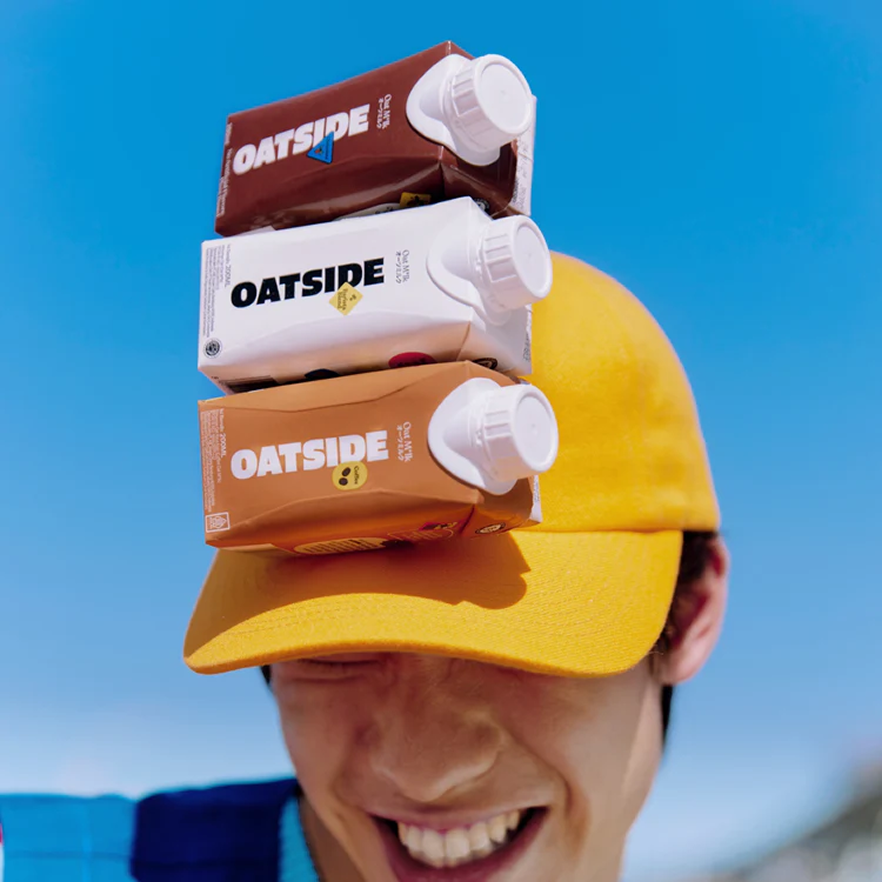
Their packaging, tone, and visual language were so distinctive that the carton itself became a social object. Bold design and irreverent copywriting made Oatside culturally relevant in a way that paid media alone rarely achieves. The design did as much marketing work as any campaign.
Built for Asia, not borrowed from the West
Rather than copying Oatly's European positioning, Oatside designed almost every aspect of the business for Asia — flavour profile, coffee applications, manufacturing location, regional supply chain, and market expansion strategy. Founder Benedict Lim has consistently stated that understanding Asian tastes better than global competitors was the company's core advantage.
Invested heavily before launch
Most FMCG startups validate demand first and invest later. Oatside reversed the sequence, raising approximately S$22 million before commercial launch to build production capacity capable of serving multiple Asian markets from day one. This manufacturing moat created durable advantages in product quality, supply reliability, and cost optimisation as volumes scaled.
Where they are today
Oatside is now widely perceived as Asia's premium oat milk brand — not simply another plant-based alternative. It operates across 19 markets and reaches more than 300,000 cafés and retail outlets, making it one of the largest oat milk brands originating from Asia.
Its reputation rests on four attributes that reinforce each other: exceptional taste, a coffee-first identity, a distinctly Asian brand story, and a playful design-led presence that earns cultural relevance beyond the category.
Most tellingly, consumers no longer view Oatside primarily as a "sustainable alternative." It has become a mainstream beverage brand whose sustainability credentials are an added benefit rather than its primary selling point — exactly the positioning Benedict Lim envisioned from day one.